Statement on our Agency’s commitment to confidentiality in our care:
We don’t ask questions of our clients around citizenship or documentation. We never have and never will. We also do not disclose any personal or contact information about our clients without their written permission. If any public agency comes seeking such information, they will be turned away and referred to our legal representation. We are contractually obligated by the County and other funders to keep HIPAA privacy laws and protect the privacy and confidentiality of all of our clients. See our “Notice of Privacy Practices” in our Center, and on the paperwork shared during intake of all counseling and case management services.
Meet Colin Amato, our Clinical Director, explain our Counseling and Case Management Services.

Solano Pride Center offers counseling and psychotherapy to the LGBTQIA2S+ community of Solano County.
There are openings available for those who wish to be seen for counseling services right now! We can even talk to you if you just want to make sense of the times we live in. We are able to see clients for up to six months at no cost to clients, helping you make sense of life as a queer person, get support coming out, or deepening your self confidence by talking about your past. Please call our confidential line to make an appointment at: 707-389-4520.
In addition Solano Pride Center is accepting application from Associate Clinicians (AMFT and ACSW) in addition to trainees needing practicum sites who are interested in providing therapy to the LGBTQ community. Please contact our Clinical Director Colin Amato at colin@solanopride.org for more information.
Have you ever been near the end of your rope, and need someone to help you find the resources you need to survive? Solano Pride Center staff can help!
Many of our staff know much about the County’s support system, and can help you sign up for food assistance, Medi-Cal, and even give you referrals to our sister organizations serving those in need around the county. Give Kacen Cosmos, our Associate Clinical Social Worker a jingle or email to learn more.
Trangender Law Center’s ID Please Resource for helping Trans, Intersex and GNC people change their identification cards
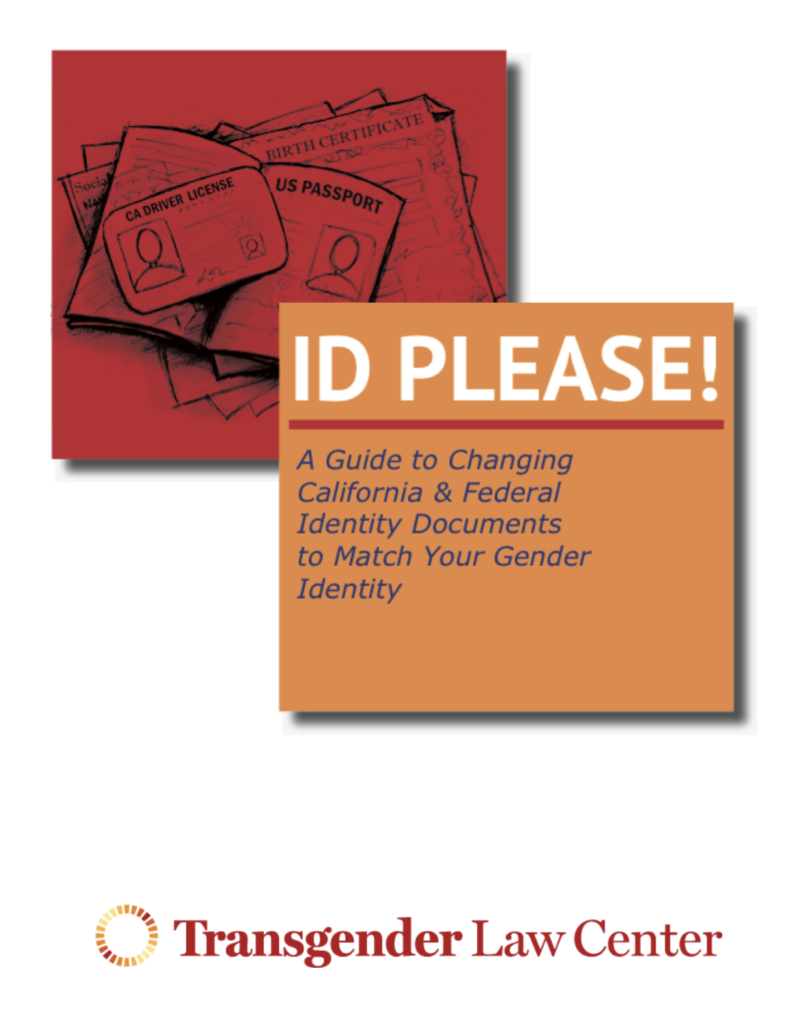
This guide was created to help you navigate the often confusing process of obtaining California and federal identification documents that reflect your gender and identity. It is designed to be used without the assistance of an attorney. However, in some cases it may be quickest or easiest to work with one.
The information in this guide should not be considered legal advice. This guide provides you with legal information but does not seek to apply that information to your specific situation. We’ve tried very hard to make sure that this resource is accurate and up-to-date. Still, the changing nature of laws and policies concerning identity documents makes 100% accuracy nearly impossible. It’s also important to note that this is a guide to policy, and how things are supposed to work. Unfortunately, not all judges and other government employees always implement these policies by the book.
If you have a question about your specific legal situation, feel free to contact Transgender Law Center’s Legal Information Helpdesk at http://www.transgenderlawcenter.org/legalinfo and we’ll do our best to answer your question or point you to resources that may be helpful.
https://tlcenter.app.box.com/s/3da7afk3p7dn1ngoxcz3tuy18q3u1dco
If you find yourself in crisis during this time, please call the 988 Suicide and Crisis Lifeline or our partners at these crisis numbers!
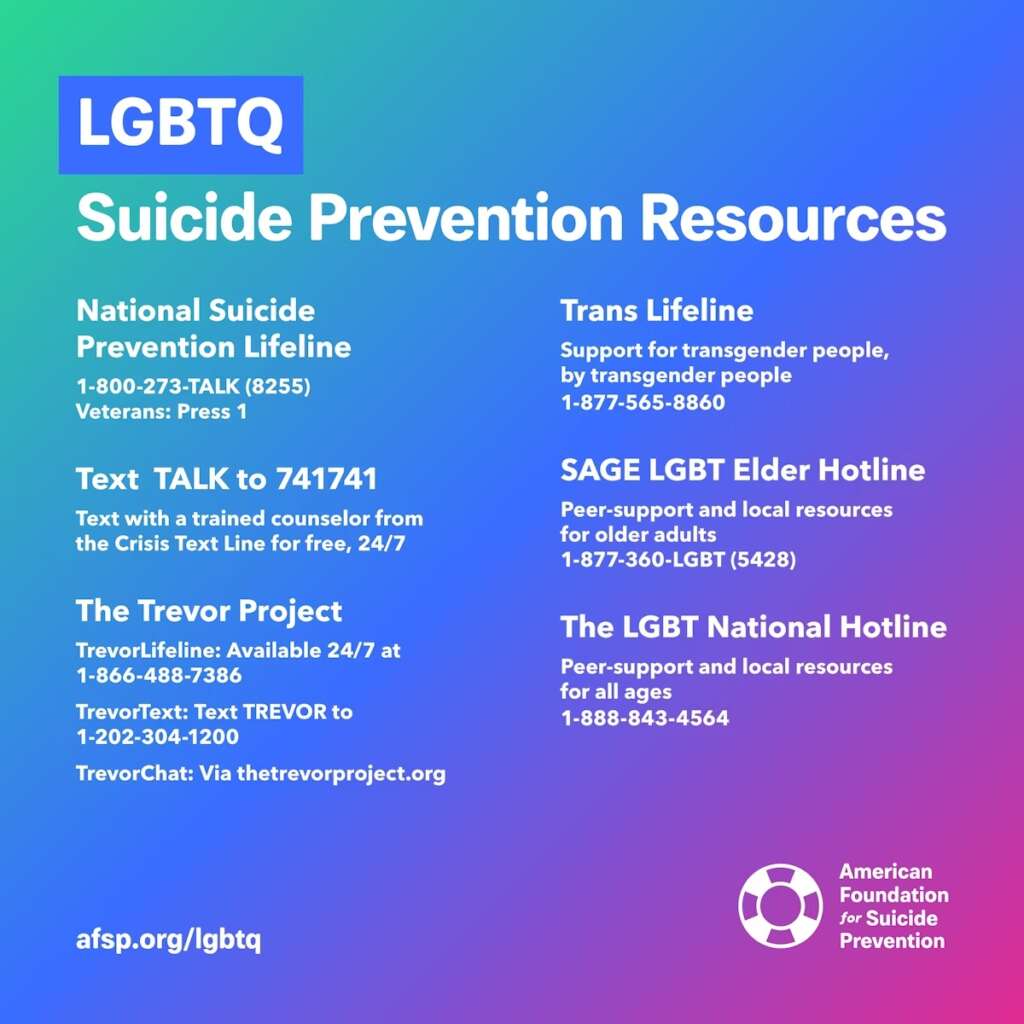
• Trevor Project Crisis Line: 1-866-488-7386
• Trans Lifeline Crisis Number: 1-877-565-8860
• Solano County Mobile Crisis Number: 707-806-0866
• Solano County Crisis Stabilization Service Number: 707-428-1131
The Bi+ Burnout Survival Guide
Preparing for September when you’re tired of being the one-person bi+ brigade.
BISEXUAL KILLJOY. AUG 27
Every September, bi+ people are invited to be visible, educate, represent, celebrate, and shut up about the complicated aspects of the LGBTQ+ community. We’re allowed to wear purple, wave our flags, and host parties that people say they want to go to or support, but then those same people do neither. We’re finally allowed to talk about bi+ness, but the channel is stuck on “visibility,” even though our community is sicker than anyone wants to acknowledge. When we allow ourselves to be visible, we wind up having to explain our identities to queers, straights, friends, family, and even partners.
So, a time of the year that’s supposed to be a celebration for bi+ people winds up us making our own cake. Well, I mean, it’s like we bake the cake, take the cake to the party, slice it, serve it, and then clean up afterward.
It’s exhausting. And if you’re feeling some type of way about it, I feel you. Let’s talk about it.
Thanks for reading Bisexual Killjoy! Subscribe to receive new posts and support our work.
What Bi+ Burnout Looks Like
Like regular burnout, bi+ burnout isn’t the same as fatigue. This burnout is a specific kind of weariness that’s a result of navigating too many spaces that weren’t made for you and/or actively antagonize you for entering. It can also show up in other ways:
- Feeling like the only bi+ person in the room
- Performing emotional labor in queer spaces that still side-eye you
- Having to define your sexuality over and over again
- Watching a bi+ celebrity get dragged over their identity and called a “traitor”
- Getting nervous about bringing your partner(s) to a queer event
- Minimizing yourself in a queer space because “other people need it more”
- Wondering if you’re being too sensitive about bi+ erasure
- Organizing queer events in the hopes that you’ll be accepted by the community, but realizing no matter how hard you work, it’s not enough
Bi+ burnout whispers, “Do more, you fake,” even when you’re running on fumes. It tells you that your work is never done. It isn’t, but you don’t have to burn yourself up in the process.
Why It Hits Us Differently
Maybe you’re reading this and feeling seen. I’m sorry if you are, but glad that you found us. Bi+ burnout is a unique experience because we have to traverse queer and straight spaces. We are expected to perform sexuality, and the direction depends on the audience. We’re carrying cognitive dissonance in our emotional rucksack. But in a very real sense, bi+ people are routinely under-researched and erased by data, dismissed in queer spaces, and fetishized in straight spaces (you know the ones).
Unlike monosexuals, bi+ people are seen as transitional, experimental, or confused. Unlike monosexuals, the only way to “prove” our identity is to actively date multiple genders at once (and if those partners aren’t with you all at once and kissing, are you really bi?). Unlike monosexuals, we’re ready for a fight in any room we out ourselves in in order to validate our claim to a space.
For those of us who advocate for the bi+ community, we show up to a lot of events where we watch attendees talk to every booth but ours. We speak up online and fight with strangers. We work hard to educate and destigmatize. We hold the line for every bi+ kid who needs to know that they are not alone.
But no one’s holding the line for us when we’re collapsing under the weight of burnout?
How to Keep Caring Without Collapsing
This guide isn’t about quitting. I want you to care about yourself and the bi+ community without burning. You deserve longevity. You deserve support. You deserve to care from a place that’s not constantly breaking your heart. And in the world we live in, that sort of resiliency is the thing that’s going to keep a lot of us going.
Here’s how we (heavy on the we because bi+ burnout has been my reality for the past six months) do that:
Reclaim the Power of No
You’ve heard it before, but “no” is a complete sentence. You don’t have to educate anyone about bi+ness. You don’t have to prove the validity of your identity. You don’t owe anyone access to your person because they want to test whether or not you’re telling the truth about your own identity.
Micro-Actions Are Better Than Martyrdom
Look, this one is specifically for me, but you probably need to hear it, too. You do not have to do everything to do something. So many bi+ people I know are chronically ill doers who go into a room, identify everything wrong with it, try to address all the problems, then burn out expeditiously. Small, sustainable action—like sharing a post, joining a bi+ group, donating, showing up with a friend to help them advocate for themselves in a medical setting, taking a picture of yourself with a flag that resonates with you to remind people we exist—will fill you up, give you little wins, and prevent burnout. You don’t have to be a bi+ superhero to make a difference.
Rest is Vital
I’m writing this as someone who has a very hard time resting. I love a list. I love a plan. I love feeling useful. And when you’re bi+, you get used to being useful to queer orgs that need you to organize, to friends who need a walking Wikipedia page on fluid identity, to movements that want your numbers but not your voice. But rest isn’t indulgent. It’s not something you “earn” after proving your worth. It’s a requirement. A strategy. A way to stay in this for the long haul.
Community Care > Solo Survival
You are not supposed to hold the weight of bisexuality+ alone. Being bi+ shouldn’t mean being the spokesperson, the educator, the event planner, the crisis responder, and the therapist all at once. But so many of us fall into that role, either because no one else is stepping up, or because we’re afraid of what will happen if we stop. The truth? Community doesn’t mean doing everything for everyone. It means doing what you can with other people. Let someone else take the mic. Let someone else run the group chat or write the email. Rotate the labor. Ask for help. Say yes when others offer.
Make It Fun When You Can
This work is heavy. That’s why finding joy matters. Not in a “choose happiness” kind of way, but because laughter and levity are how many of us stay in it. If you’re burned out, it’s okay to lean into what feels good. Host the bisexual brunch. Meme your way through the latest round of discourse. Rewatch Jennifer’s Body. Joy doesn’t mean you’re not paying attention. It means you’ve figured out how to survive without turning to stone. Fun isn’t frivolous.
You’re Allowed to Take a Break
Bi+ Visibility Month will be here in a few days (yes, month, not week or day), and that often means we’re asked to do the most for a community that’s too often forgotten the rest of the year.
So before we sprint into September, here’s your reminder: You don’t have to be the loudest voice, the most informed educator, or the most available person in the room to be valid. You don’t need to post daily, show up everywhere, or keep explaining yourself to people who should know better by now.
Showing up for this community doesn’t always look like marching or educating. Sometimes it looks like resting. Sometimes it’s showing up for another bi+ person who needs support more than a hashtag. Sometimes it’s just staying soft enough to try again tomorrow.
Bi+ people have survived erasure, ridicule, and invisibility not because we never got tired, but because we refused to disappear.
So take a break if you need to. Recharge. Set boundaries. When you’re ready, come back not as a savior but as someone who knows we’re in this together.
You were never meant to hold this alone. You’re not alone now.
From the burnout recovery closet,
Bailey
To join the Bisexual Killjoy substack, visit: https://www.bisexualkilljoy.com